In today’s visual-driven world, panoramic images have become essential for industries like real estate, travel, architecture, and digital marketing. These sweeping visuals enable viewers to experience spaces and landscapes in an immersive way that standard photos cannot capture. However, creating a perfect panorama isn’t as simple as merging several images. Achieving precise color accuracy and flawless alignment requires both technical expertise and advanced software. This is where professional panorama photo stitching services play a crucial role, ensuring that every panoramic image appears seamless, balanced, and true to life.
The Role of Panorama Photo Stitching Services in Perfecting Panoramic Images
Professional panorama photo stitching services combine cutting-edge technology with a deep understanding of photography fundamentals to produce stunning panoramic visuals. When multiple photos are captured to create a panorama, even slight differences in exposure, white balance, or camera movement can cause visible seams, color inconsistencies, or distorted perspectives. Stitching services address these issues through a meticulous workflow that blends images pixel by pixel while maintaining natural tones and alignment.
Specialized editors use software like PTGui, Adobe Photoshop, or Autopano Giga to analyze the overlapping regions of each image. The software identifies control points, small common details between two photos, to align them with mathematical precision. In addition, color correction and blending tools help ensure that variations caused by lighting conditions or camera settings are neutralized. The result is a cohesive panoramic image where transitions between frames are invisible to the viewer.
Achieving Color Accuracy Through Professional Editing Techniques
Color accuracy is one of the most critical aspects of creating realistic panoramic photographs. Even slight color mismatches can make the final image look artificial or unbalanced. Professionals begin by calibrating the images to ensure consistent exposure and white balance across the entire series. This process eliminates the subtle differences that often occur when photos are taken under changing light, such as during sunrise, sunset, or cloudy weather.
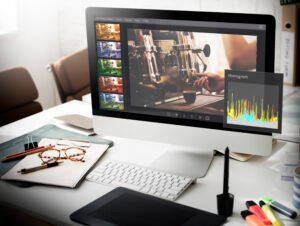
Advanced panorama editors also rely on color grading and blending algorithms to ensure uniform tones. For example, they may use histogram matching to balance brightness and contrast between adjacent frames. Shadow and highlight recovery techniques are often applied to maintain detail in areas that might otherwise appear overexposed or underexposed.
Another essential step involves working in a high-bit color environment, typically 16-bit or higher, which provides more color information for smooth blending. This prevents visible banding or tonal shifts when merging multiple images. By preserving accurate hues and gradients, panorama stitching professionals deliver results that look natural and vibrant, whether it’s the blue of a clear sky, the green of rolling hills, or the subtle tones of an interior space.
Ensuring Precise Alignment and Seamless Composition
Proper alignment is just as important as color accuracy in panoramic photography. Misaligned frames can lead to skewed horizons, duplicated objects, or uneven stitching lines that ruin the illusion of continuity. To avoid this, editors use precise control point detection and geometric correction methods.
In professional panorama stitching, algorithms detect shared features between overlapping images, such as corners, edges, or textures, and use them as anchors for alignment. The software then adjusts each frame’s position, rotation, and perspective to ensure everything lines up perfectly. When necessary, editors manually refine alignment to correct parallax errors, which can occur if the camera was moved slightly between shots.
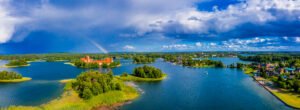
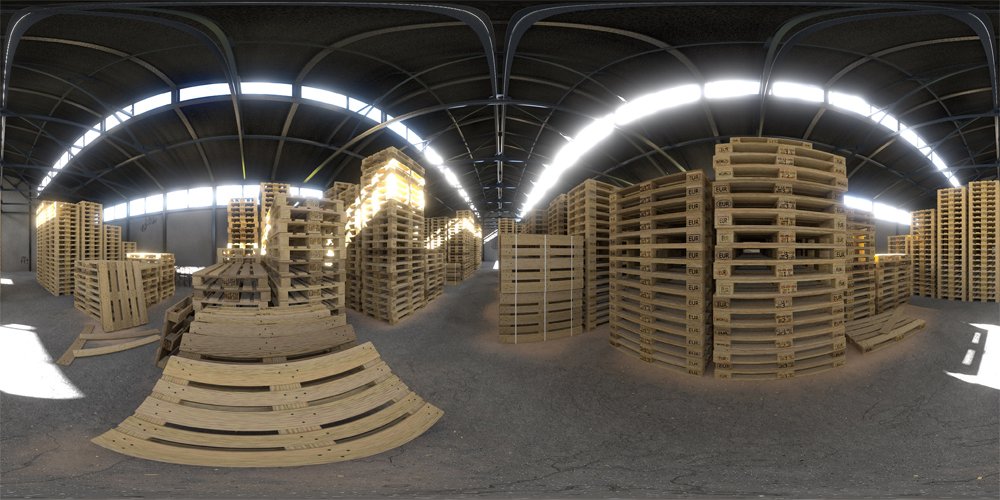
Additionally, cylindrical or spherical projection methods are often used to maintain perspective consistency, especially for 360-degree or wide-angle panoramas. These projections prevent distortion while keeping vertical and horizontal lines straight. The goal is to produce a panorama that feels natural and continuous, as if it were captured in a single frame.
Why Professional Panorama Stitching Makes a Difference
While automatic panorama tools are available in most editing programs, professional services offer a level of quality and precision that automated solutions can’t match. Experienced editors understand the nuances of exposure balancing, ghosting removal, and perspective correction. They take the time to fine-tune each frame manually, ensuring no visible artifacts, banding, or mismatched tones remain.
For photographers, real estate agents, or businesses that rely on high-impact visuals, outsourcing panorama stitching saves time while guaranteeing superior results. Professional teams can handle large volumes of images, maintain color fidelity across multiple projects, and deliver files optimized for print, web, or virtual-tour platforms.
Conclusion
Creating a flawless panoramic image requires more than simply combining a series of photos; it demands accuracy, patience, and expertise. Professional panorama photo stitching services ensure that every element, from color harmony to precise alignment, is handled with care. By leveraging advanced software, meticulous editing, and experienced judgment, these services transform a collection of ordinary images into one breathtaking panoramic view. For anyone seeking to elevate their visual storytelling, whether showcasing a luxury property, a scenic destination, or a city skyline, investing in professional panorama stitching is the key to achieving images that captivate and inspire.